 Trustpilot
Get free designs & quote in 24 hours

How to Set Up a Company Swag Store That Works
3
Min Read
Most branded swag programs fail the same way. Someone orders 500 hoodies, ships them to the office, and six months later half of them are still in boxes. The problem is not the products. It is the delivery model.
A company swag store solves this. Instead of bulk ordering and hoping for the best, your team can log in and request what they need, when they need it. New hire joining next week? Their kit ships directly to their door. Sales team heading to a conference? They pick their own items. Marketing needs branded gifts for customers in three countries? Done without a single spreadsheet.
This guide covers how to set up a company swag store that works, from choosing what to stock to managing it for a globally distributed team. If you are still figuring out which products belong in your store, start with our guide to best company swag ideas first.
What Is a Company Swag Store?
A company swag store is an internal or external online storefront where employees, customers, or event attendees can browse and order branded swag. Products are pre-approved, pre-branded, and ready to ship. The person ordering does not need to manage production, quality checks, or logistics.
The store can be open to employees only, to customers and partners, or to both. Some companies use them purely for internal culture and onboarding. Others use them as a customer gifting tool or a brand awareness play. Most end up using them for all three.
The key difference between a swag store and traditional bulk ordering is control. With bulk ordering, someone in procurement decides what the whole company gets. With a swag store, distribution is flexible, waste is lower, and the right product reaches the right person at the right moment.
What to Stock in Your Company Swag Store
The products you stock will shape how often the store gets used. Stick to things people actually want to wear, carry, or use at their desk every day. A well-chosen range across four categories is all you need to start.
Apparel
Apparel is the backbone of any swag store. It travels outside the office, shows up in photos, and does more brand-building per item than anything else in the catalog. Keep the range focused: one or two strong pieces beat a dozen forgettable ones.
1. Premium Hoodie
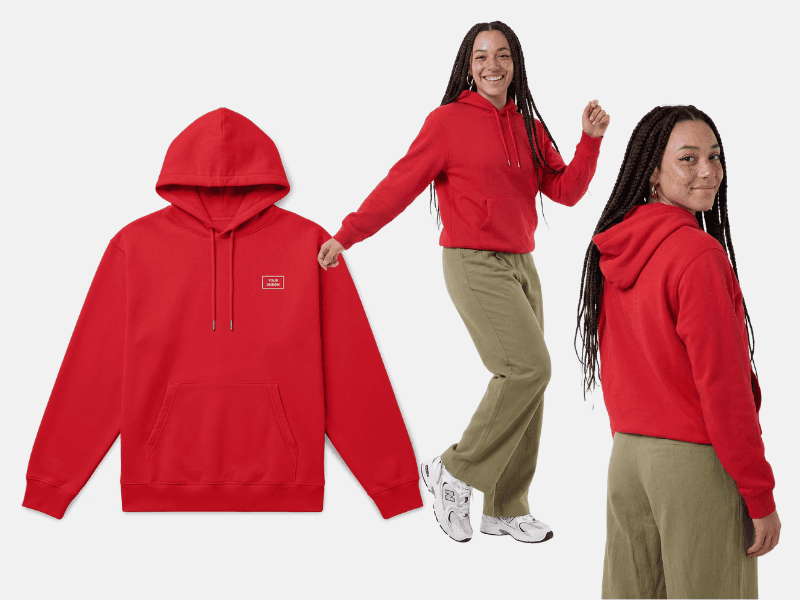
Made from 85% organic cotton and 15% recycled polyester. The hoodie that companies like Bolt and Mollie use for their own swag programs. It holds its shape after washing and the fabric weight feels considered rather than promotional. Available in 15+ colorways.

2. Premium T-Shirt
A 100% organic cotton tee with a modern fit that does not look or feel like a conference freebie. Works for onboarding kits, team events, and casual Fridays. The print surface is clean and holds color well across screen print and embroidery.

3. Premium Sweatshirt
The crewneck version of the hoodie. Some employees prefer it, some team leads want both options in the store, and it photographs well in team photos. Same organic cotton blend, same production quality.
4. Classic Socks
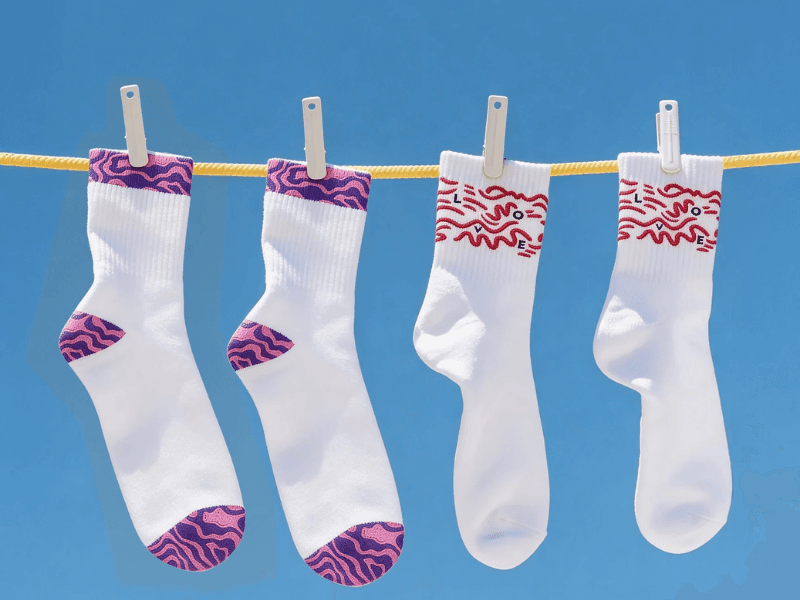
Custom socks are one of the most-requested items in tech and creative company stores. They are affordable enough to stock at volume, weird enough to get noticed, and actually get worn. Good option for adding a lower-cost item to the range without compromising quality.
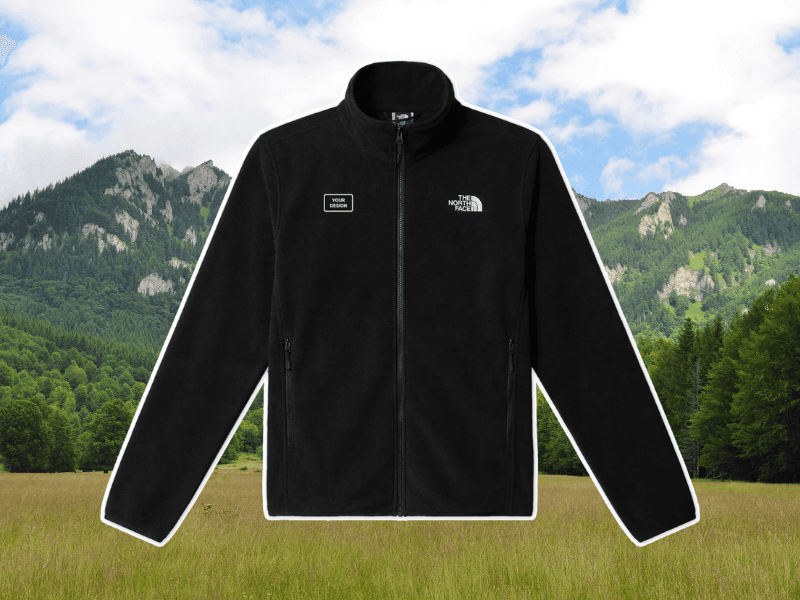
5. North Face Full-Zip Fleece
This is the premium tier of the apparel range. Recognized brand, high-quality construction, and the kind of item people actually request. Best used for senior hires, long-service milestones, or a VIP tier in the store where employees can redeem points.
Drinkware
Drinkware has the highest daily visibility of any branded product. A bottle or tumbler goes to meetings, commutes, the gym, and video calls. It is the category that keeps working long after the order ships.

6. Dopper Original · 450 ml
The Dopper is the bottle that appears in more company store orders than any other. It is made from recycled plastic, has a distinctive stackable cap design, and the sustainability story gives employees something to talk about. Recognizable enough to communicate brand intent without saying a word.

7. Stanley Quencher Tumbler · 1.2 L
Stanley Quencher Tumbler · 1.2 L
The Stanley has cultural currency right now. People who own one carry it everywhere and talk about it. Stocking a recognizable item like this signals that the store was put together with taste, not just ticked a box. High perceived value, long product lifespan.
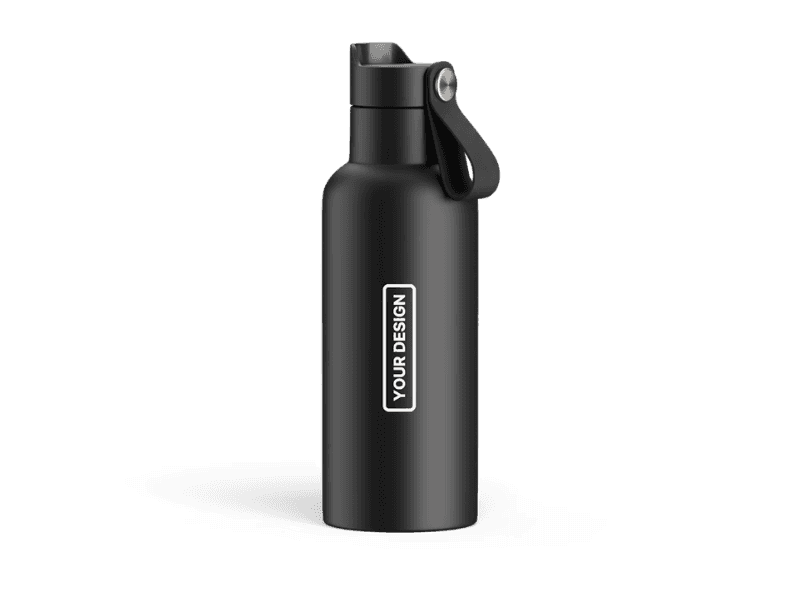
8. Urban Thermo · 500 ml
A double-wall insulated thermos that keeps drinks at temperature for hours. Compact enough for a bag, practical enough for daily use. A solid mid-range drinkware option that works across team sizes and office or remote setups.

9. Full Color Mug
Still the most-ordered desk item in most company stores. Full color print means the whole mug becomes a branding surface, not just a logo on a handle. Works especially well for remote employees who spend most of their day at a home desk.
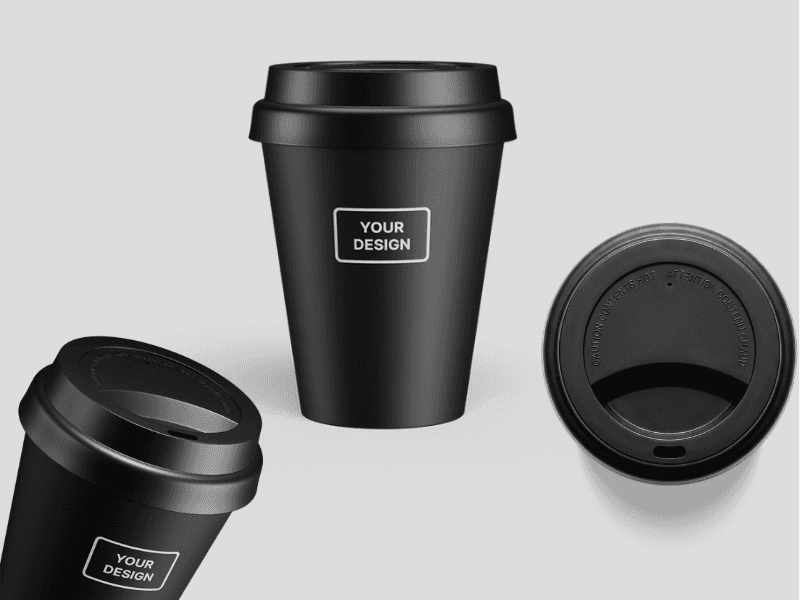
10. Essential Coffee Cup
A reusable takeaway cup for the team members who grab coffee on the way to the office. Lightweight, lid-sealed, and easy to clean. Replacing single-use cups is a practical sustainability argument that lands well when you introduce the store.
Tech Accessories
Tech accessories get used the moment someone unpacks them. They solve actual problems at work, which is why they tend to disappear from stores faster than apparel.
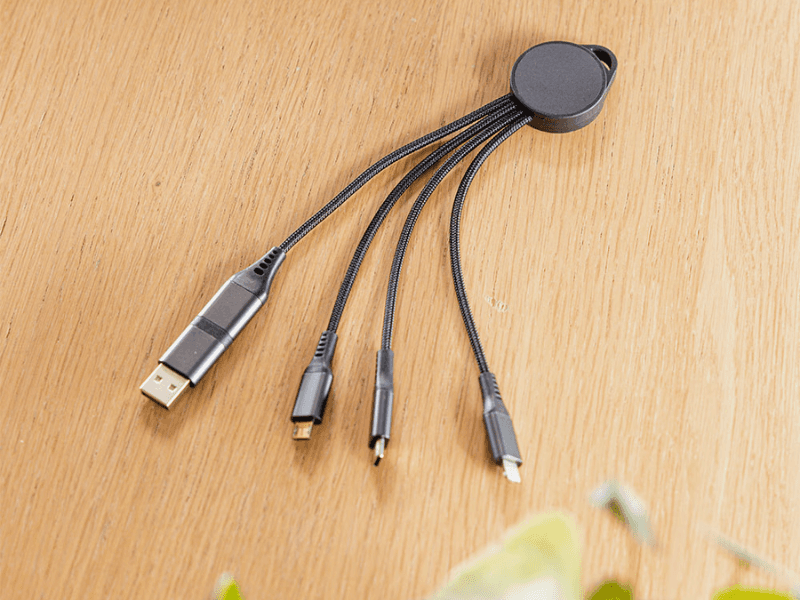
11. 6-in-1 Charging Cable
Compatible with USB-C, Micro USB, and Lightning. One cable that works with every device on a team. Made from recycled materials. This is the item that gets pulled out of the onboarding kit first and used every single day. It is small, practical, and the logo stays visible.
12. 4000 mAh Powerbank
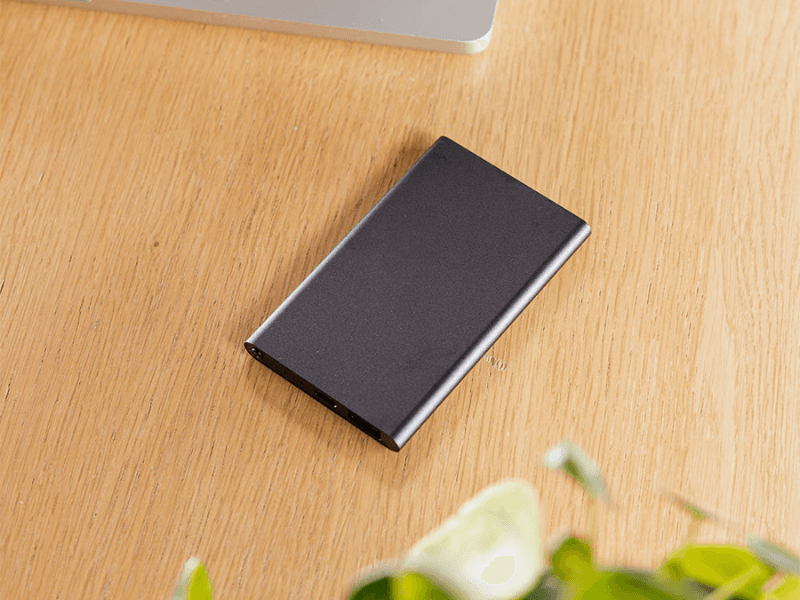
The portable charger that goes to conferences, airports, and long travel days. Made from recycled ABS plastic. High-utility items like this tend to live in bags permanently rather than sitting in a drawer, which means the logo stays in circulation.

13. Aluminium Wireless Charger
A wireless charging pad that sits on the desk all day. Every time someone places their phone on it, the branded surface is visible. Good for desk-based employees and a step up from cable charging for office culture stores.
14. Universal Laptop Stand
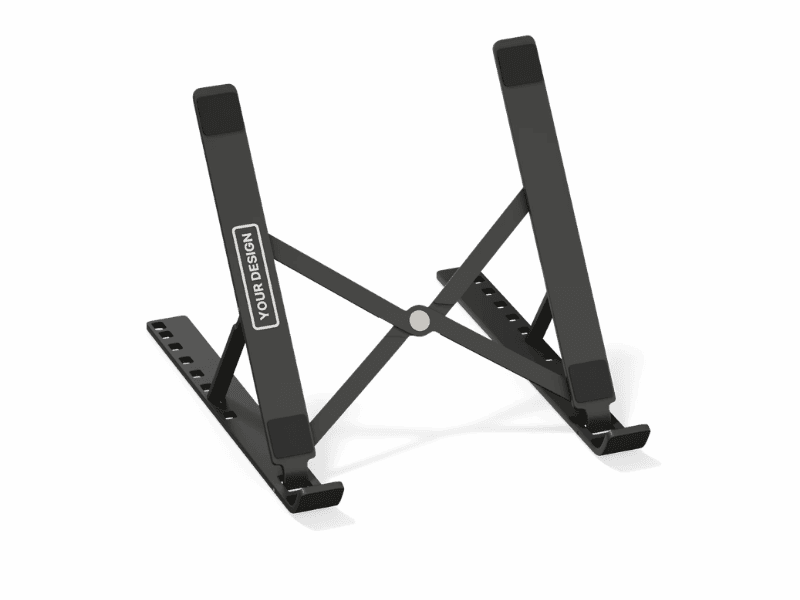
Remote and hybrid employees spend hours looking at their screens. A laptop stand improves posture and puts the screen at eye level. It is the kind of item that actually improves how someone’s day goes, which is a different category from items that just look nice on a shelf.
15. JBL Headphones
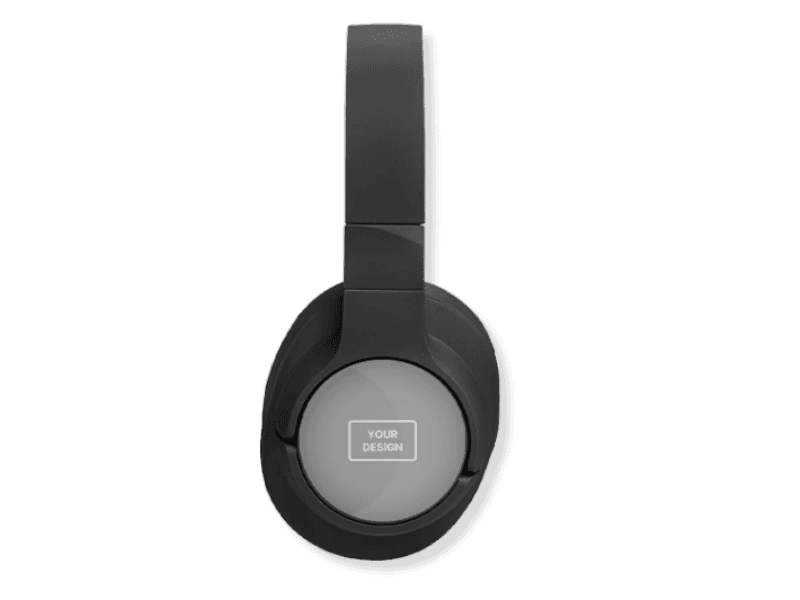
JBL is a brand people recognize and trust. Stocking a recognized audio brand in the premium tier of a swag store says something about quality standards. Best positioned as a high-value reward for long service, referrals, or team milestones rather than a general issue item.
Office and Desk Items
Office items anchor the store for employees who prefer functional over wearable. They work well as onboarding kit components and pair easily with apparel or drinkware. For a full breakdown of what performs across categories, see our guide to promotional products worth stocking.
16. Bespoke Hardcover Notebook
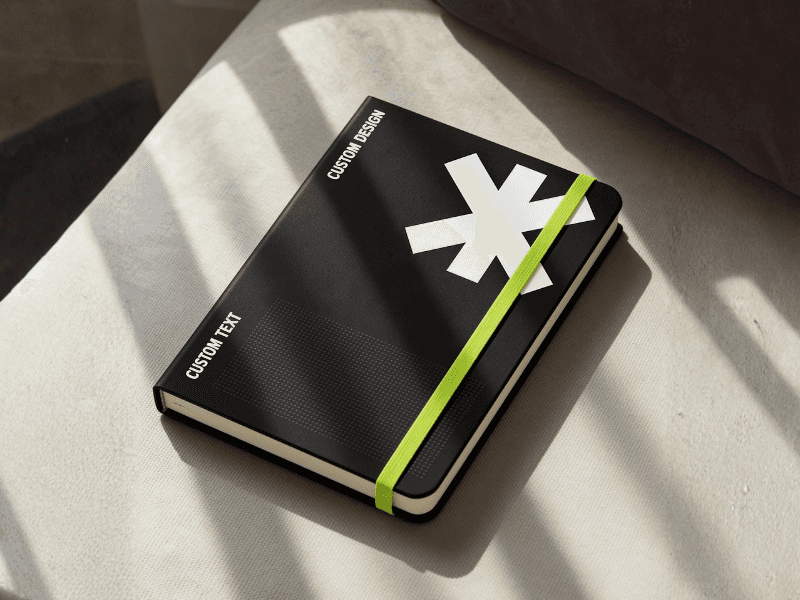
FSC-certified paper, recycled cardboard cover, ribbon bookmark. The notebook that does not feel like swag. It gets used in meetings, taken to offsites, and kept on desks for months. One of the most consistently reordered items in the Monday Merch catalog.
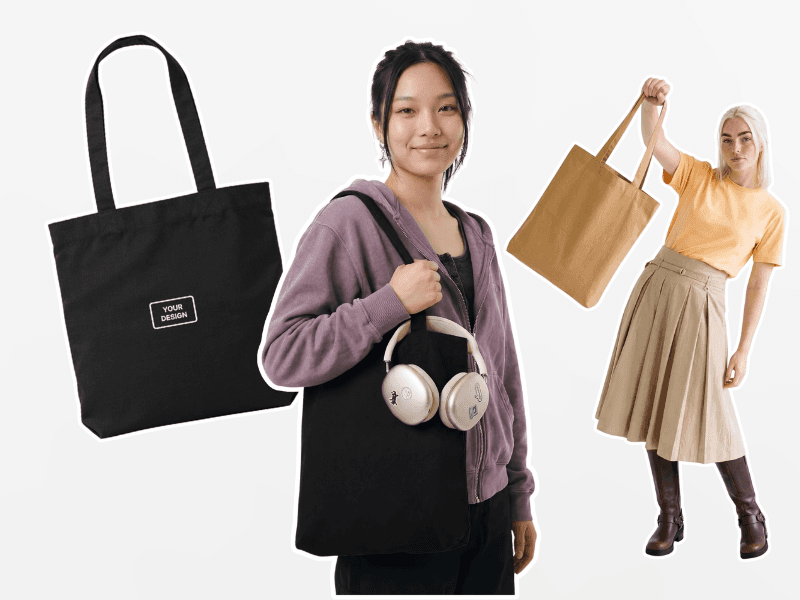
17. Classic Tote Bag
Made from undyed recycled fabric. The everyday carry for people who do not want a branded backpack but want something to take to work, markets, or travel. High branding surface, practical for all team sizes, and ships flat which keeps fulfillment costs low.
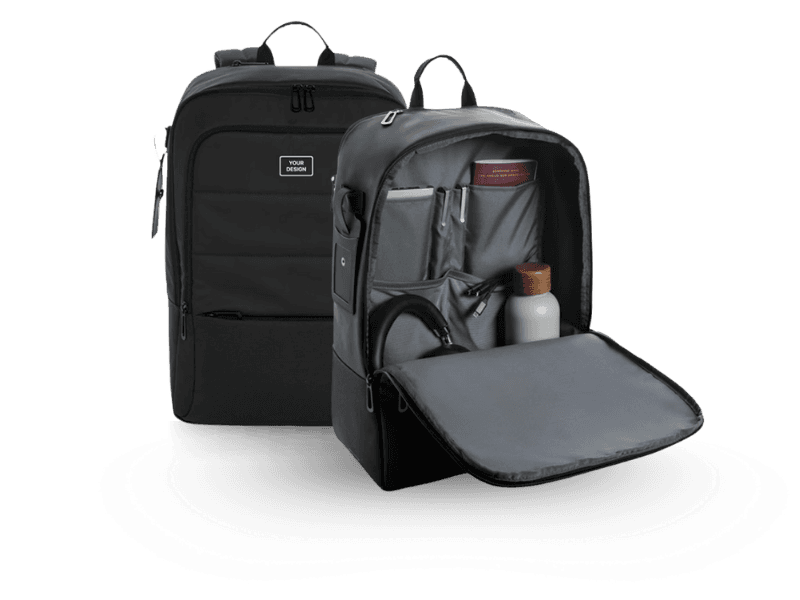
18. Premium Laptop Backpack 15.6”
A padded laptop backpack with multiple compartments, water-resistant base, and USB charging port. The kind of bag employees actually want to use rather than own as a brand artifact. Strong for remote workers, frequent travelers, and onboarding packs for senior roles.
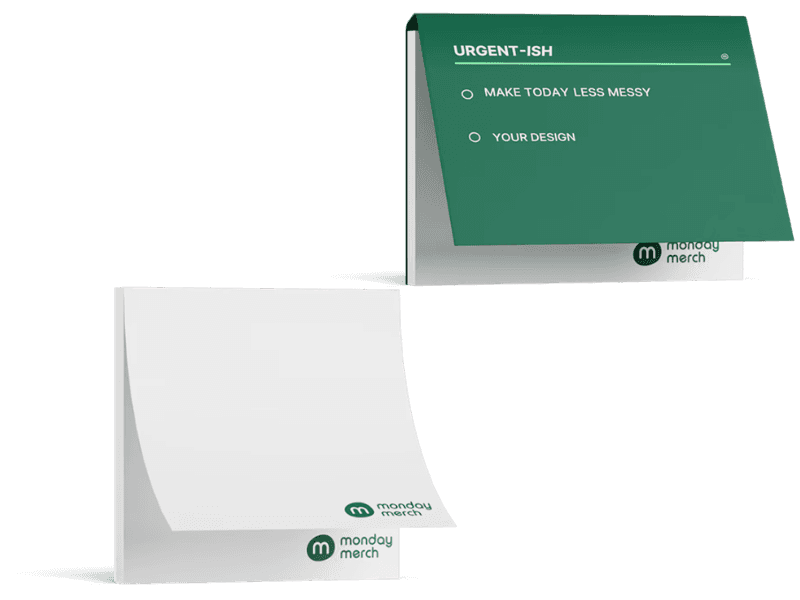
19. Sticky Notes Set
A small-format, affordable item that rounds out a desk kit without adding weight or cost. Custom-branded sticky notes are practical and keep the logo on the desk without requiring much effort from the employee. Good volume filler for lower-budget store tiers.
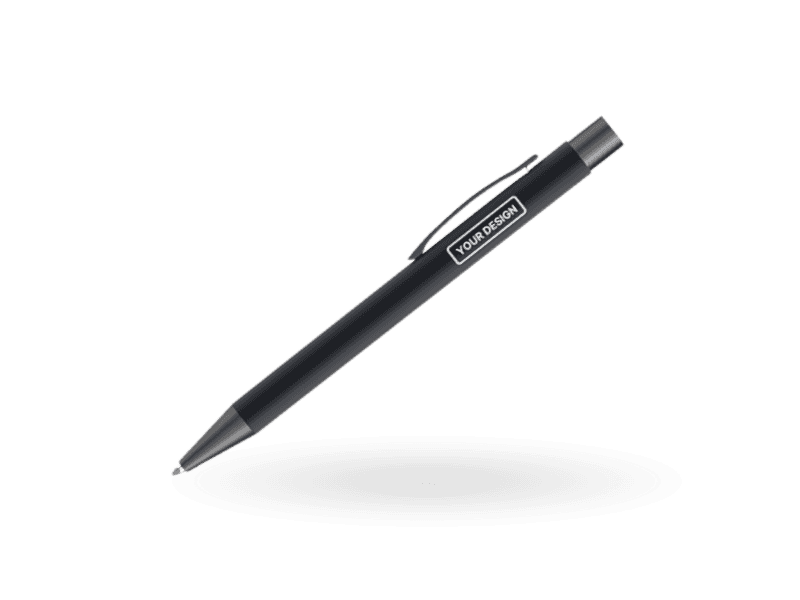
20. Classic Pen
Still the item that leaves the office most reliably. Pens travel into meetings, customer calls, and networking events. Not glamorous, but a well-made branded pen signals more care than a cheap plastic version. Best included as an add-on in kits rather than a standalone store item.
A store with 10 to 15 well-chosen products outperforms one with 50 mediocre options. Fewer choices make it easier to maintain stock, control quality, and keep branding consistent.
On-Demand vs. Bulk Ordering: Which Model Fits Your Team
There are two ways to run a swag store, and the right one depends on your team size, distribution needs, and how often your product range changes.
On-demand ordering
Products are produced and shipped when someone places an order. There is no warehousing cost and no risk of surplus stock. This model works well for distributed teams, companies that update branding regularly, and programs that need to ship to many different countries.
The trade-off is lead time. On-demand orders take longer to produce than shipping from existing stock. For planned moments like onboarding or events, this is easy to manage. For urgent requests, it requires some forward planning.
Warehoused stock
Products are produced in bulk and stored in a fulfillment warehouse, then shipped on request. Lead times are short because inventory is ready to go. This works well for high-volume programs where the same items are ordered frequently.
The downside is upfront cost and the risk of holding stock that does not move. If your branding changes or a product underperforms, you are left with inventory you cannot use.
Most companies with under 200 employees start on-demand and move to a hybrid model as order volumes grow. Companies with large, stable teams and consistent product ranges tend to benefit more from warehousing from the start.
How to Keep Branding Consistent Across Your Store
The most common swag store problem is not product quality. It is brand drift. Different team members place orders at different times, and over two years the logo appears in three sizes, four colors, and five positions across the product range.
Avoid this by locking down the essentials before the store goes live.
Brand guidelines: Define primary and secondary logo versions, approved colors, and minimum size requirements. Share these with your swag supplier before any product goes live.
Pre-approved mockups: Lock in the logo placement, size, and color for each product before adding it to the store. Do not leave placement decisions to production.
Approved product list: Only stock products that have been reviewed and signed off on quality. Letting individual team members add items without review is how brand drift starts.
Annual review: Schedule a review once a year to remove underperforming products, update designs for any brand changes, and refresh the range based on what is actually getting ordered.
Setting Up for Remote and Globally Distributed Teams
A swag store that only ships to one country is not a swag store. It is a local warehouse. If your team is spread across multiple countries, your store needs to reach all of them. For product recommendations that work specifically for remote employees, see our guide to swag ideas for remote teams.
Global distribution adds three layers of complexity: shipping costs, customs and duties, and lead times by region. The simplest way to manage this is to work with a swag partner that has fulfillment infrastructure in your key markets rather than shipping everything from a single location.
A few things to confirm before going live with an international store.
Shipping coverage: Confirm that your supplier ships to every country where your team has employees. Some regions have restrictions or very long lead times.
Duties and taxes: Decide in advance whether the company covers import duties or whether recipients pay. Surprises at delivery kill the gifting experience.
Sizing: Collect sizing preferences during onboarding rather than at the point of ordering. Waiting until someone needs a hoodie to ask their size creates delays.
Address collection: For remote teams, direct-to-employee shipping is standard. Make sure the store collects and stores addresses securely at the point of onboarding, not at the point of ordering.
If you are building out onboarding kits as part of your store, see our breakdown of onboarding pack ideas for product combinations that work well as first-day welcome packages.
Mistakes Companies Make When Running a Swag Store
Most swag store problems are predictable. Here are the ones that come up most often and how to avoid them.
Stocking too many products. A store with 40 items sounds comprehensive. In practice it fragments orders, increases stock management complexity, and makes decisions harder for the person ordering. Start with 10 to 15 strong products.
Launching without a budget framework. Without clear spend limits per employee or per use case, store usage can scale unpredictably. Define budget allowances per person per year before launch, not after the first invoice arrives.
Treating the store as a one-time project. A swag store needs a quarterly review minimum. Products go out of stock, designs go stale, and team preferences change. Assign ownership to a specific person who reviews the store on a schedule.
Choosing products for price rather than quality. Cheap swag communicates something about the company whether you intend it to or not. A store stocked with low-quality items tells employees their experience is not worth the investment.
Skipping the sustainability check. More companies are including sustainability criteria in their supplier requirements. Choosing products with certified materials from the start avoids having to replace the entire range later. For a curated list, see our guide to eco-friendly swag options.
How Monday Merch Builds Swag Stores for Companies Worldwide
Setting up a swag store is not something most companies want to manage in-house. Sourcing products, handling branding approvals, setting up the storefront, warehousing stock, and shipping to dozens of countries is a full operation. Monday Merch takes all of it on.
The platform is built for organizations that need flexibility. Whether the store is for internal employees only, open to customers and fans, or a combination of both, the setup scales to match. Access can be restricted by email domain, open to the public, or tiered by role or region. If your team is spread across multiple countries, products ship directly to each employee regardless of where they are based.
The companies Monday Merch has built stores for range from early-stage startups to global institutions. A few examples below show real customer success stories and what different store setups look like in practice.
Nolimit City: Global swag store and fan engagement
Nolimit City, the online casino game developer behind some of the industry’s most recognized titles, needed a store that worked for both internal teams across Malta, Sweden, India, and Romania, and for fans worldwide. Monday Merch built and managed the full operation: store setup, global logistics, and ongoing support. Their Head of Marketing described it as an end-to-end service that let the team stay focused on brand rather than logistics.
SES: Launching a global Style Store after a major rebrand
After merging with US-based Intelsat, the satellite communications company SES needed to bring thousands of newly joined employees across dozens of countries into a shared brand identity. Monday Merch built the SES Style Store, a branded platform where employees in Luxembourg, Brazil, and everywhere in between could access the same products under the same refreshed brand. Louise Scott, Director of Corporate Marketing, put it simply: for the first time, they had a team that knew exactly what they were doing on a global level.
European Space Agency: A swag store open to employees, supporters, and the public
ESA’s audience spans employees, space enthusiasts, educators, and supporters across Europe and internationally. Monday Merch built a structured store that served all of them, giving ESA a way to offer branded products to a broad and geographically dispersed audience without managing production or fulfillment internally.
Studaro: Letting students choose what they actually want
Studaro, a student-facing platform, used Monday Merch to solve a specific problem: different people want different things. Rather than bulk ordering one product and hoping it lands, the online store let their audience choose the items they genuinely wanted. The result is less waste, higher satisfaction, and a store that runs itself.
These are four different organizations with four different audiences and four different definitions of what a swag store should do. The common thread is that Monday Merch handled the infrastructure, and each company stayed focused on their brand.
Ready to Build Your Company Swag Store?
Monday Merch manages the full process: product sourcing, branding, quality control, warehousing, and global shipping. Over 6,000+ companies across 65+ countries use the platform to run their branded swag programs, from startup onboarding kits to enterprise-scale swag stores.
You can browse the full product catalog, request a quote, or speak with a swag consultant about what a store setup looks like for your team size and distribution needs.
Talk to the Monday Merch team to get started.
Most branded swag programs fail the same way. Someone orders 500 hoodies, ships them to the office, and six months later half of them are still in boxes. The problem is not the products. It is the delivery model.
A company swag store solves this. Instead of bulk ordering and hoping for the best, your team can log in and request what they need, when they need it. New hire joining next week? Their kit ships directly to their door. Sales team heading to a conference? They pick their own items. Marketing needs branded gifts for customers in three countries? Done without a single spreadsheet.
This guide covers how to set up a company swag store that works, from choosing what to stock to managing it for a globally distributed team. If you are still figuring out which products belong in your store, start with our guide to best company swag ideas first.
What Is a Company Swag Store?
A company swag store is an internal or external online storefront where employees, customers, or event attendees can browse and order branded swag. Products are pre-approved, pre-branded, and ready to ship. The person ordering does not need to manage production, quality checks, or logistics.
The store can be open to employees only, to customers and partners, or to both. Some companies use them purely for internal culture and onboarding. Others use them as a customer gifting tool or a brand awareness play. Most end up using them for all three.
The key difference between a swag store and traditional bulk ordering is control. With bulk ordering, someone in procurement decides what the whole company gets. With a swag store, distribution is flexible, waste is lower, and the right product reaches the right person at the right moment.
What to Stock in Your Company Swag Store
The products you stock will shape how often the store gets used. Stick to things people actually want to wear, carry, or use at their desk every day. A well-chosen range across four categories is all you need to start.
Apparel
Apparel is the backbone of any swag store. It travels outside the office, shows up in photos, and does more brand-building per item than anything else in the catalog. Keep the range focused: one or two strong pieces beat a dozen forgettable ones.
1. Premium Hoodie
Made from 85% organic cotton and 15% recycled polyester. The hoodie that companies like Bolt and Mollie use for their own swag programs. It holds its shape after washing and the fabric weight feels considered rather than promotional. Available in 15+ colorways.
2. Premium T-Shirt
A 100% organic cotton tee with a modern fit that does not look or feel like a conference freebie. Works for onboarding kits, team events, and casual Fridays. The print surface is clean and holds color well across screen print and embroidery.
3. Premium Sweatshirt
The crewneck version of the hoodie. Some employees prefer it, some team leads want both options in the store, and it photographs well in team photos. Same organic cotton blend, same production quality.
4. Classic Socks
Custom socks are one of the most-requested items in tech and creative company stores. They are affordable enough to stock at volume, weird enough to get noticed, and actually get worn. Good option for adding a lower-cost item to the range without compromising quality.
5. North Face Full-Zip Fleece
This is the premium tier of the apparel range. Recognized brand, high-quality construction, and the kind of item people actually request. Best used for senior hires, long-service milestones, or a VIP tier in the store where employees can redeem points.
Drinkware
Drinkware has the highest daily visibility of any branded product. A bottle or tumbler goes to meetings, commutes, the gym, and video calls. It is the category that keeps working long after the order ships.
6. Dopper Original · 450 ml
The Dopper is the bottle that appears in more company store orders than any other. It is made from recycled plastic, has a distinctive stackable cap design, and the sustainability story gives employees something to talk about. Recognizable enough to communicate brand intent without saying a word.
7. Stanley Quencher Tumbler · 1.2 L
Stanley Quencher Tumbler · 1.2 L
The Stanley has cultural currency right now. People who own one carry it everywhere and talk about it. Stocking a recognizable item like this signals that the store was put together with taste, not just ticked a box. High perceived value, long product lifespan.
8. Urban Thermo · 500 ml
A double-wall insulated thermos that keeps drinks at temperature for hours. Compact enough for a bag, practical enough for daily use. A solid mid-range drinkware option that works across team sizes and office or remote setups.
9. Full Color Mug
Still the most-ordered desk item in most company stores. Full color print means the whole mug becomes a branding surface, not just a logo on a handle. Works especially well for remote employees who spend most of their day at a home desk.
10. Essential Coffee Cup
A reusable takeaway cup for the team members who grab coffee on the way to the office. Lightweight, lid-sealed, and easy to clean. Replacing single-use cups is a practical sustainability argument that lands well when you introduce the store.
Tech Accessories
Tech accessories get used the moment someone unpacks them. They solve actual problems at work, which is why they tend to disappear from stores faster than apparel.
11. 6-in-1 Charging Cable
Compatible with USB-C, Micro USB, and Lightning. One cable that works with every device on a team. Made from recycled materials. This is the item that gets pulled out of the onboarding kit first and used every single day. It is small, practical, and the logo stays visible.
12. 4000 mAh Powerbank
The portable charger that goes to conferences, airports, and long travel days. Made from recycled ABS plastic. High-utility items like this tend to live in bags permanently rather than sitting in a drawer, which means the logo stays in circulation.
13. Aluminium Wireless Charger
A wireless charging pad that sits on the desk all day. Every time someone places their phone on it, the branded surface is visible. Good for desk-based employees and a step up from cable charging for office culture stores.
14. Universal Laptop Stand
Remote and hybrid employees spend hours looking at their screens. A laptop stand improves posture and puts the screen at eye level. It is the kind of item that actually improves how someone’s day goes, which is a different category from items that just look nice on a shelf.
15. JBL Headphones
JBL is a brand people recognize and trust. Stocking a recognized audio brand in the premium tier of a swag store says something about quality standards. Best positioned as a high-value reward for long service, referrals, or team milestones rather than a general issue item.
Office and Desk Items
Office items anchor the store for employees who prefer functional over wearable. They work well as onboarding kit components and pair easily with apparel or drinkware. For a full breakdown of what performs across categories, see our guide to promotional products worth stocking.
16. Bespoke Hardcover Notebook
FSC-certified paper, recycled cardboard cover, ribbon bookmark. The notebook that does not feel like swag. It gets used in meetings, taken to offsites, and kept on desks for months. One of the most consistently reordered items in the Monday Merch catalog.
17. Classic Tote Bag
Made from undyed recycled fabric. The everyday carry for people who do not want a branded backpack but want something to take to work, markets, or travel. High branding surface, practical for all team sizes, and ships flat which keeps fulfillment costs low.
18. Premium Laptop Backpack 15.6”
A padded laptop backpack with multiple compartments, water-resistant base, and USB charging port. The kind of bag employees actually want to use rather than own as a brand artifact. Strong for remote workers, frequent travelers, and onboarding packs for senior roles.
19. Sticky Notes Set
A small-format, affordable item that rounds out a desk kit without adding weight or cost. Custom-branded sticky notes are practical and keep the logo on the desk without requiring much effort from the employee. Good volume filler for lower-budget store tiers.
20. Classic Pen
Still the item that leaves the office most reliably. Pens travel into meetings, customer calls, and networking events. Not glamorous, but a well-made branded pen signals more care than a cheap plastic version. Best included as an add-on in kits rather than a standalone store item.
A store with 10 to 15 well-chosen products outperforms one with 50 mediocre options. Fewer choices make it easier to maintain stock, control quality, and keep branding consistent.
On-Demand vs. Bulk Ordering: Which Model Fits Your Team
There are two ways to run a swag store, and the right one depends on your team size, distribution needs, and how often your product range changes.
On-demand ordering
Products are produced and shipped when someone places an order. There is no warehousing cost and no risk of surplus stock. This model works well for distributed teams, companies that update branding regularly, and programs that need to ship to many different countries.
The trade-off is lead time. On-demand orders take longer to produce than shipping from existing stock. For planned moments like onboarding or events, this is easy to manage. For urgent requests, it requires some forward planning.
Warehoused stock
Products are produced in bulk and stored in a fulfillment warehouse, then shipped on request. Lead times are short because inventory is ready to go. This works well for high-volume programs where the same items are ordered frequently.
The downside is upfront cost and the risk of holding stock that does not move. If your branding changes or a product underperforms, you are left with inventory you cannot use.
Most companies with under 200 employees start on-demand and move to a hybrid model as order volumes grow. Companies with large, stable teams and consistent product ranges tend to benefit more from warehousing from the start.
How to Keep Branding Consistent Across Your Store
The most common swag store problem is not product quality. It is brand drift. Different team members place orders at different times, and over two years the logo appears in three sizes, four colors, and five positions across the product range.
Avoid this by locking down the essentials before the store goes live.
Brand guidelines: Define primary and secondary logo versions, approved colors, and minimum size requirements. Share these with your swag supplier before any product goes live.
Pre-approved mockups: Lock in the logo placement, size, and color for each product before adding it to the store. Do not leave placement decisions to production.
Approved product list: Only stock products that have been reviewed and signed off on quality. Letting individual team members add items without review is how brand drift starts.
Annual review: Schedule a review once a year to remove underperforming products, update designs for any brand changes, and refresh the range based on what is actually getting ordered.
Setting Up for Remote and Globally Distributed Teams
A swag store that only ships to one country is not a swag store. It is a local warehouse. If your team is spread across multiple countries, your store needs to reach all of them. For product recommendations that work specifically for remote employees, see our guide to swag ideas for remote teams.
Global distribution adds three layers of complexity: shipping costs, customs and duties, and lead times by region. The simplest way to manage this is to work with a swag partner that has fulfillment infrastructure in your key markets rather than shipping everything from a single location.
A few things to confirm before going live with an international store.
Shipping coverage: Confirm that your supplier ships to every country where your team has employees. Some regions have restrictions or very long lead times.
Duties and taxes: Decide in advance whether the company covers import duties or whether recipients pay. Surprises at delivery kill the gifting experience.
Sizing: Collect sizing preferences during onboarding rather than at the point of ordering. Waiting until someone needs a hoodie to ask their size creates delays.
Address collection: For remote teams, direct-to-employee shipping is standard. Make sure the store collects and stores addresses securely at the point of onboarding, not at the point of ordering.
If you are building out onboarding kits as part of your store, see our breakdown of onboarding pack ideas for product combinations that work well as first-day welcome packages.
Mistakes Companies Make When Running a Swag Store
Most swag store problems are predictable. Here are the ones that come up most often and how to avoid them.
Stocking too many products. A store with 40 items sounds comprehensive. In practice it fragments orders, increases stock management complexity, and makes decisions harder for the person ordering. Start with 10 to 15 strong products.
Launching without a budget framework. Without clear spend limits per employee or per use case, store usage can scale unpredictably. Define budget allowances per person per year before launch, not after the first invoice arrives.
Treating the store as a one-time project. A swag store needs a quarterly review minimum. Products go out of stock, designs go stale, and team preferences change. Assign ownership to a specific person who reviews the store on a schedule.
Choosing products for price rather than quality. Cheap swag communicates something about the company whether you intend it to or not. A store stocked with low-quality items tells employees their experience is not worth the investment.
Skipping the sustainability check. More companies are including sustainability criteria in their supplier requirements. Choosing products with certified materials from the start avoids having to replace the entire range later. For a curated list, see our guide to eco-friendly swag options.
How Monday Merch Builds Swag Stores for Companies Worldwide
Setting up a swag store is not something most companies want to manage in-house. Sourcing products, handling branding approvals, setting up the storefront, warehousing stock, and shipping to dozens of countries is a full operation. Monday Merch takes all of it on.
The platform is built for organizations that need flexibility. Whether the store is for internal employees only, open to customers and fans, or a combination of both, the setup scales to match. Access can be restricted by email domain, open to the public, or tiered by role or region. If your team is spread across multiple countries, products ship directly to each employee regardless of where they are based.
The companies Monday Merch has built stores for range from early-stage startups to global institutions. A few examples below show real customer success stories and what different store setups look like in practice.
Nolimit City: Global swag store and fan engagement
Nolimit City, the online casino game developer behind some of the industry’s most recognized titles, needed a store that worked for both internal teams across Malta, Sweden, India, and Romania, and for fans worldwide. Monday Merch built and managed the full operation: store setup, global logistics, and ongoing support. Their Head of Marketing described it as an end-to-end service that let the team stay focused on brand rather than logistics.
SES: Launching a global Style Store after a major rebrand
After merging with US-based Intelsat, the satellite communications company SES needed to bring thousands of newly joined employees across dozens of countries into a shared brand identity. Monday Merch built the SES Style Store, a branded platform where employees in Luxembourg, Brazil, and everywhere in between could access the same products under the same refreshed brand. Louise Scott, Director of Corporate Marketing, put it simply: for the first time, they had a team that knew exactly what they were doing on a global level.
European Space Agency: A swag store open to employees, supporters, and the public
ESA’s audience spans employees, space enthusiasts, educators, and supporters across Europe and internationally. Monday Merch built a structured store that served all of them, giving ESA a way to offer branded products to a broad and geographically dispersed audience without managing production or fulfillment internally.
Studaro: Letting students choose what they actually want
Studaro, a student-facing platform, used Monday Merch to solve a specific problem: different people want different things. Rather than bulk ordering one product and hoping it lands, the online store let their audience choose the items they genuinely wanted. The result is less waste, higher satisfaction, and a store that runs itself.
These are four different organizations with four different audiences and four different definitions of what a swag store should do. The common thread is that Monday Merch handled the infrastructure, and each company stayed focused on their brand.
Ready to Build Your Company Swag Store?
Monday Merch manages the full process: product sourcing, branding, quality control, warehousing, and global shipping. Over 6,000+ companies across 65+ countries use the platform to run their branded swag programs, from startup onboarding kits to enterprise-scale swag stores.
You can browse the full product catalog, request a quote, or speak with a swag consultant about what a store setup looks like for your team size and distribution needs.
Talk to the Monday Merch team to get started.
Table of Contents
Stay up to date
Stay up to date
Stay up to date
More Articles
More Articles
Read more about how to effectively use company swag or swag packs for your business.