
3
Min Read
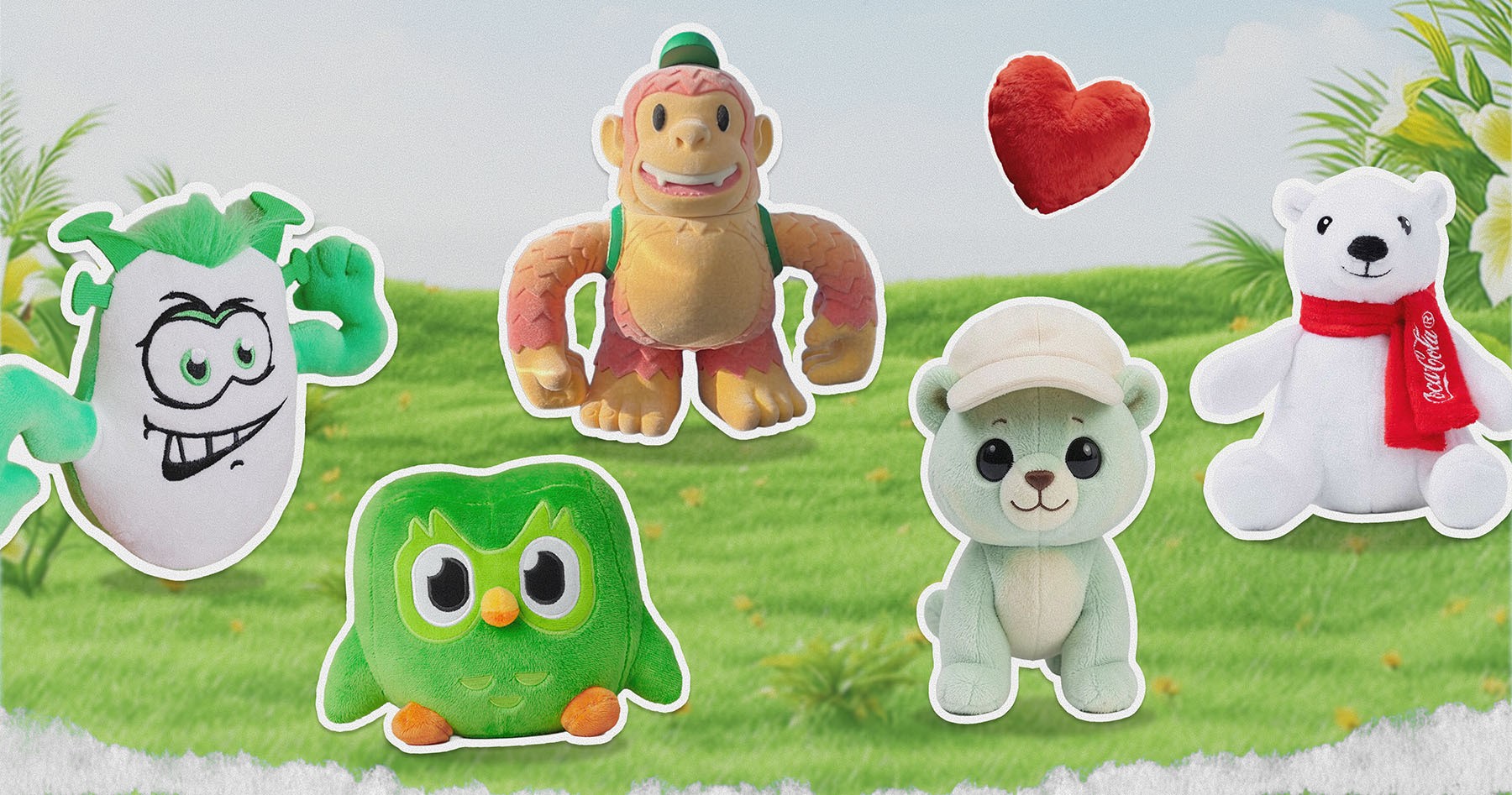
You have probably seen custom branded plush toys before.
A small plush mascot sitting on someone’s desk next to a laptop. Sometimes a bear, sometimes an owl, sometimes a chimp wearing a tiny company hoodie.
The surprising part is how rarely those toys disappear.
Pens run out of ink. Water bottles get replaced. Tote bags end up in cupboards. But a well-designed bespoke plush toy tends to stay exactly where it was placed the first time, whether on a desk, on a shelf, or somewhere visible in the background of video calls.
More companies are starting to experiment with custom branded plush toys as part of their swag strategy. When done well, they become something most promotional products never achieve: a branded object people actually keep.
This guide explores how custom plush toys are made, real company examples, and how businesses can use them effectively in corporate gifting and events.
What Are Custom Branded Plush Toys?
Custom branded plush toys are soft toys designed specifically to represent a company's brand, mascot, or product character.
Unlike standard promotional swag, these toys are created entirely from scratch, allowing businesses to transform a logo character, illustrated mascot, or creative concept into a fully three-dimensional, stitched, and stuffed product.
The defining quality of a custom branded plush toy is that it is original.
No two are the same because each one begins with a brand brief. The shape, posture, fabric, eye style, fill material, and finishing details are all specified to match the brand's visual identity and the intended use of the toy.
The result is a piece of branded swag that cannot be bought anywhere else and cannot be replicated by a competitor.
Companies use custom plush toys across a wide range of contexts: corporate gifting, employee onboarding kits, exhibits giveaways, marketing campaigns, client appreciation, and cause-related programs.
What makes them effective across all of these contexts is the same quality that makes them unusual as a format. They are kept not because they are useful, but because they create a feeling.
Real Companies Using Branded Plush Toys: What Worked and Why
The most persuasive argument for any gifting strategy is not theory. It is evidence.
Here are several examples of companies that have used custom branded plush toys in ways that produced measurable results, from social media reach to exhibit traffic to long-term brand recall.
Mailchimp and Freddie: A Mascot That Outlasted Every Campaign

Freddie von Chimpenheimer, the winking chimp at the center of Mailchimp's brand identity, is one of the most effective marketing mascots of the past two decades.
What started as a logo character became the emotional anchor of an entire company culture, and eventually, a physical object people wanted to own.
Mailchimp produced vinyl figures and soft toy versions of Freddie, distributing them to customers, contest winners, and at events.
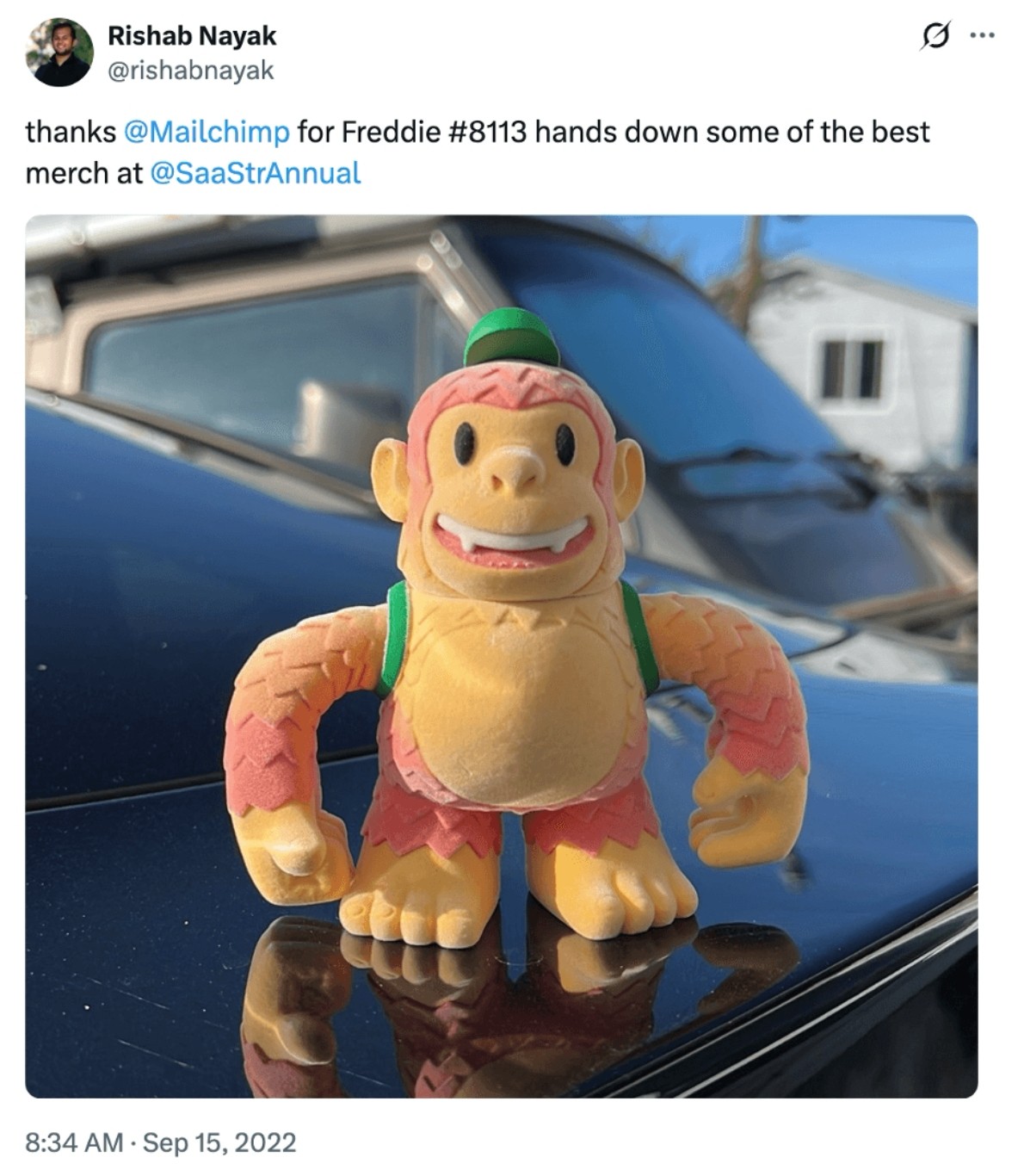
The response was immediate and organic. Recipients posted photographs of their Freddie toys on social media, often placed on desks alongside other personal items.
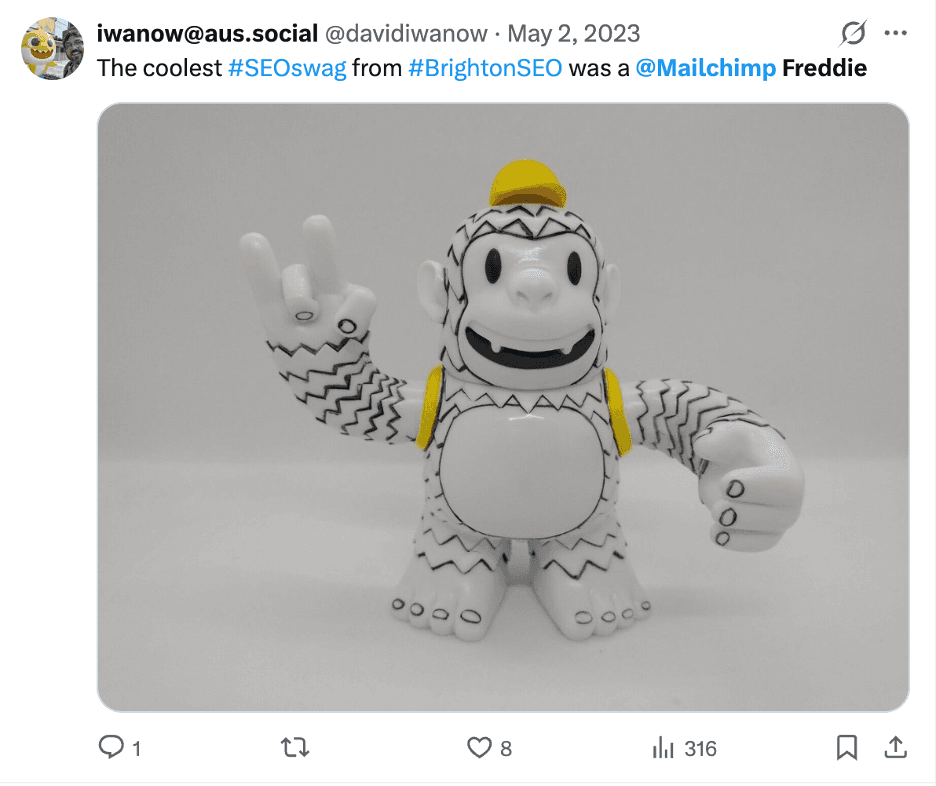
Mailchimp did not engineer this behavior. People wanted to share the toy because it was genuinely delightful, and because it carried the warmth and personality of a brand they already trusted.
"We tried to take a wide-eyed, childlike approach while producing something that was modest in scope and budget."

The lesson from Mailchimp is not about production budget. It is about character.
A personalized plush toy works best when it represents something the brand actually stands for, not just a logo applied to fabric.
Freddie worked because he was already full of personality before he became a physical object. The toy was the natural extension of that identity.
Coca-Cola Polar Bears: When Swag Becomes a Cultural Artifact

The Coca-Cola polar bear campaign launched in 1993 and within a year the bears had become one of the brand's most recognized symbols globally.
The branded plush toys and collectibles that followed were not an afterthought. They were a response to the genuine emotional connection the bear characters had already created.

Coca-Cola ran promotional campaigns where fans could win plush polar bears as purchase incentives or limited-edition collectibles.
The demand was extraordinary. Vintage Coca-Cola polar bear plush toys still trade on resale platforms today, more than three decades after their initial distribution, at prices that reflect genuine collector interest.
What Coca-Cola demonstrated is that a custom branded plush toy's value compounds over time. The toy does not stop working after the campaign ends.
It keeps living in homes, appearing on shelves, being passed between family members, and generating brand impressions long after the moment of gifting has passed.
Duolingo and Duo: When a Plush Toy Goes Viral

Duolingo’s green owl mascot, Duo, is one of the most recognizable brand characters in the world right now.
It is built largely on a single personality trait: the meme-worthy persistence of an owl that will not let you skip your language lesson.
Rather than distancing themselves from that reputation, Duolingo leaned into it completely, and their official plush toy became one of the most documented examples of branded swag generating organic reach in recent memory.
In November 2023, San Diego resident Marcus Ziadé ordered the official Duo plushie from the Duolingo swag store to celebrate a 1,500-day learning streak.

When his order arrived, it included a note written entirely in Duo’s established character: “Thank you! I hope you enjoy your purchase from my swag store. I also hope that you do your daily lessons, because if you don’t…well, let’s just say I know where you live now.”
Ziadé posted a photo of the plush and the note on X (formerly Twitter).
The post reached over 7 million views, landed on the front page of Reddit, and was reshared widely across Instagram.
Duolingo’s own team responded in character on the thread, extending the moment further.
A single plush toy order, a note written to match the brand’s personality, and a genuine customer photo produced more reach than most paid campaigns could justify on budget.
Miltenyi Biotec: Plush Toys in a Healthcare Context

Perhaps the most unexpected example on this list. Miltenyi Biotec, a life sciences company, developed a series of custom plush toys called Happy Cells, representing biological cells in approachable, friendly form.
The toys were used for brand awareness, customer education, and conference presence in a professional healthcare and research context.
The campaign demonstrated something important that many brands overlook: the format works far outside the obvious contexts.

A branded plush toy does not need a cute consumer mascot to succeed. It needs a clear creative idea and an understanding of the audience.
In a sector as serious as medical research, the unexpected playfulness of the format was precisely what made it memorable and distinctly shareable.
When Promotional Plush Toys Work Best for Companies
Custom branded plush toys are not a universal solution for every gifting or marketing context.
They work best in specific situations where the combination of emotional resonance, physical visibility, and brand character alignment creates a result that standard swag simply cannot achieve.
Exhibits and Conferences
Many brands order promotional plush toys in bulk specifically for conference use, and with good reason. In an environment full of printed brochures and generic giveaways, a well-designed plush mascot becomes a talking point.
It draws people to your booth, gives them something to carry visibly through the event, and travels home to sit on a desk or shelf long after the conference ends.
The ongoing visibility from a single plush toy event swag distributed at one event can span months or years.
Employee Onboarding Kits
The first impression a company makes on a new hire matters more than most organizations acknowledge.
A welcome kit that includes a corporate plush toy signals something specific: this company has personality, pays attention to detail, and wants you to feel something on day one.
It also photographs well, which means it tends to generate organic social sharing from new employees, putting your brand in front of their professional networks at no additional cost.
Client and Partner Gifting
Most corporate gifts are forgotten within weeks. A company mascot plush toy that reflects genuine creative thought is kept, displayed, and shown to visitors.
For relationship-based businesses where client warmth and long-term recall matter, a plush toy on a client's desk is a form of ongoing presence that a branded pen or notebook cannot replicate.
Family and Community Campaigns
When a brand's gifting or marketing touches employees' or customers' families, the dynamics change.
A custom plush toy crosses that line naturally. Children respond to it immediately. Adults engage with it warmly.
The brand benefits from association with that moment of happiness, and the toy continues making impressions in a home environment that most corporate swag never reaches.
Cause Marketing and Charitable Campaigns
A number of organizations have used branded plush toys as part of charitable campaigns, donating toys to hospitals, schools, and community programs.
In this context the format is uniquely appropriate.
The gift is inherently comforting and meaningful, and the brand's association with that comfort is genuinely positive.
It is one of the few promotional formats where the act of gifting and the nature of the object align completely.
How Custom Branded Soft Toys Are Designed and Produced
One of the most common questions from companies exploring this format for the first time is how the process actually works.
Creating a custom mascot plush toy requires a more involved production process than most promotional swag, but a good bespoke plush toy company, like Monday Merch, will guide you through each stage clearly.
The process typically follows these steps:
Character design adaptation. Your existing artwork or mascot concept is reviewed and adapted for three-dimensional plush production. Designs that work well as flat illustrations often need adjustment to translate accurately into a soft toy form.
Pattern creation and material selection. The plush toy manufacturer creates a technical pattern for the toy and specifies materials including fabric type, fill, eye style, and finishing details. Color matching to brand specifications happens at this stage.
Prototype sampling and approval. A physical prototype is produced before bulk manufacturing begins. This is the stage to review proportions, color accuracy, finishing quality, and to request any adjustments before committing to full production volumes.
Bulk production and quality control. Once the prototype is approved, full production runs. Quality checks at this stage ensure consistency across the entire order.
Packaging and global delivery. The finished toys are packaged to specification and shipped to your location, or in some cases directly to multiple recipients if your fulfillment partner offers that service.
The full production timeline from design approval to delivery typically runs between 30 and 45 business days, not including shipping.
If you are working toward a specific event date, a product launch, or a seasonal gifting campaign, building that lead time into your planning from the start is the most important practical step.
On safety. For any custom branded plush toy intended as a corporate gift or distributed at family-facing events, confirm that your production partner can meet EN71 (European) or ASTM (US) safety standards.
This matters not only for regulatory compliance but for the confidence of recipients, especially when children may come into contact with the toys.
Creating Custom Branded Plush Toys with Monday Merch
Custom branded plush toys are one of those rare swag products where the investment shows up clearly in how people respond. They keep them. They display them. They talk about them.
Monday Merch makes the process straightforward: free design support, a dedicated consultant, a physical sample before bulk production, and flexible fulfillment options for teams of any size.
Get a free quote and mockup within 24 hours: View the Bespoke Plush Toy on Monday Merch or reach out to the team directly to talk through your brief. No commitment required.
Frequently Asked Questions: Custom Branded Plush Toys
What are custom branded plush toys used for?
Custom branded plush toys are used for corporate gifts, employee onboarding kits, marketing campaigns, exhibit giveaways, client appreciation, and cause-related programs. Companies most often turn mascots or brand characters into plush toys to create a memorable physical representation of their brand, one that recipients keep and display rather than setting aside after the first week.
Can a company create a custom mascot plush toy from its logo or existing brand character?
Yes, and this is the most common starting point. Many businesses convert their logos, mascots, or illustrated characters into custom mascot plush toys. A design team adapts the original artwork into a three-dimensional plush pattern that maintains the brand's visual identity while working well as a soft toy. If your brand does not yet have a mascot, many bespoke plush toy companies will help you develop a character concept from a brief.
What is the minimum order for promotional plush toys in bulk?
Most bespoke plush toy manufacturers begin production at around 100 units. Larger quantities such as 250, 500, or 1,000 pieces typically reduce the cost per unit significantly, making promotional plush toys in bulk a practical option for exhibits, onboarding programs, and corporate gifting campaigns at scale.
How long does it take to produce custom branded plush toys?
The full production process typically takes between 30 and 45 business days after design approval. This includes prototype sampling, manufacturing, and quality checks before shipment, but does not include delivery time. If you are planning for a specific event or campaign date, a minimum of six to eight weeks from brief to delivery is a comfortable timeline to work with.
Are branded plush toys appropriate as professional corporate gifts?
Yes, and the examples above demonstrate this clearly. When designed with care and intention, a custom branded plush toy can be one of the most effective corporate gifts available, precisely because it occupies a different emotional category from standard promotional swag. Mailchimp, Duolingo, and Miltenyi Biotec all operate in professional contexts. The format works because the design is thoughtful and the quality is high, not despite the fact that it is a soft toy.
What safety standards should I look for when ordering branded plush toys?
For any branded plush toy intended as a corporate gift or distributed at events where children may be present, confirm that your manufacturer can meet EN71 certification (the European standard for toy safety) or ASTM F963 (the equivalent US standard). A reputable bespoke plush toy company will be able to advise on certification requirements and confirm compliance before production begins.
Read more about how to effectively use company swag or swag packs for your business.